
Charlotte Court Cases Lookup
Charlotte court records are held at the Mecklenburg County Clerk of Superior Court. Charlotte is the largest city in North Carolina with close to 874,000 residents. North Carolina does not have municipal courts. That means Charlotte has no city court of its own. All criminal cases, civil claims, and traffic matters for Charlotte residents go through the Mecklenburg County court system. The clerk of court in Mecklenburg County keeps all case files. You can search these records online or visit the courthouse in uptown Charlotte to get copies of filings and court documents.
Charlotte Criminal Court Records
Criminal court records for Charlotte are filed in Mecklenburg County. These records include arrests, charges, court dates, and case outcomes. Both misdemeanor and felony cases appear in the county court system. Charlotte criminal court records are public unless a judge has sealed them or the law restricts access.
The Charlotte-Mecklenburg Police Department handles law enforcement for the city. CMPD maintains its own records for incidents, accidents, and arrests. You can reach CMPD records at (704) 336-2842. Police records are separate from court records. An arrest report from CMPD shows the initial charge. The court record shows what happened after the case was filed. Both types of records are useful when you need the full picture of a Charlotte criminal case.
You can look up Charlotte criminal court records through the North Carolina eCourts portal. Search by the name of the person charged or by case number. The portal shows basic case details for free. It covers all of Mecklenburg County, so it includes every Charlotte case. For certified copies or sealed records, you must contact the clerk directly.
The CMPD website also has tools for the public. Visit charlottenc.gov/CMPD to learn about police records requests in Charlotte.
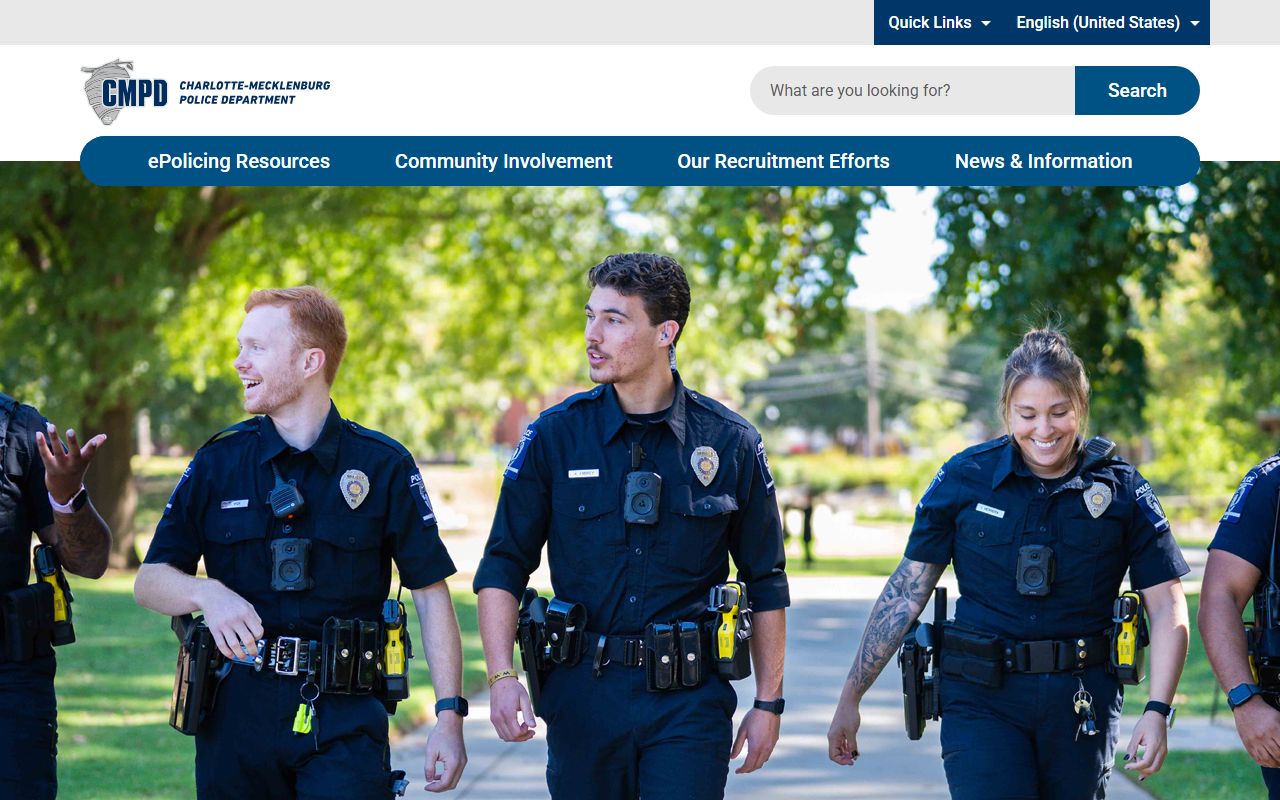
CMPD serves all areas within Charlotte city limits and handles thousands of cases each year. The department works closely with Mecklenburg County courts to process criminal matters.
Note: Charlotte criminal court records may take several days to appear online after a case is filed with the clerk.
How to Search Court Records in Charlotte
There are two main ways to search Charlotte court records. You can use the online portal or go to the courthouse in person. Each method has its own benefits.
The North Carolina eCourts system lets you search court records from home. Go to nccourts.gov and use the case search tool. You can search by party name, case number, or attorney name. The system covers all case types in Mecklenburg County. This includes criminal, civil, family, and traffic cases for Charlotte residents. Basic case data is free to view. You can see filing dates, charges, hearing dates, and case status without paying a fee.
To search in person, visit the Mecklenburg County Clerk of Superior Court. The courthouse sits in uptown Charlotte near the Charlotte Transportation Center. CATS bus routes and the LYNX Blue Line light rail stop nearby, so public transit is an option. Bring a valid photo ID when you visit. Security screens all visitors at the entrance. Staff at the clerk office can help you find records by name or case number. You can get plain or certified copies at the counter.
- Online search at nccourts.gov is free for basic case data
- In-person visits let you review full case files
- Certified copies require a fee paid to the clerk
- Phone inquiries accepted at (704) 686-0400
Note: The eCourts portal covers all of Mecklenburg County, not just Charlotte, so you may see results from other towns in the county.
Charlotte Civil Court Records
Civil cases in Charlotte cover a wide range of disputes. These include contract claims, property disputes, personal injury lawsuits, and small claims. All civil matters for Charlotte go through Mecklenburg County courts. Small claims cases are heard in district court. Larger claims go to superior court. Both courts operate from the courthouse in uptown Charlotte.
Small claims court handles cases up to $10,000 in Mecklenburg County. Charlotte residents file these at the clerk office. The process is simpler than a full civil lawsuit. You fill out a complaint form and pay the filing fee. The court sets a hearing date. Both sides present their case to a magistrate. The outcome becomes part of the Charlotte civil court records held by Mecklenburg County.
For larger civil cases, the process involves more steps. Attorneys typically handle these matters. The case file grows as each side files motions, responses, and evidence. All of these documents are part of the court record. You can review them at the clerk office or search for case details online through the eCourts portal. Charlotte civil court records are public documents.
Mecklenburg County Clerk Office
The Mecklenburg County Clerk of Superior Court handles all court records for Charlotte. This office processes new filings, stores case documents, and provides copies to the public. The clerk office is the single point of contact for court records in Charlotte since North Carolina does not operate municipal courts.
| Office | Mecklenburg County Clerk of Superior Court |
|---|---|
| Address | 832 E. 4th St Charlotte, NC 28202 |
| Phone | (704) 686-0400 |
| Hours | Monday through Friday, 8:00 AM to 5:00 PM |
| Website | nccourts.gov - Mecklenburg County |
The Charlotte City Clerk office is separate from the county clerk of court. The city clerk handles municipal business like meeting minutes and city ordinances. For court records in Charlotte, you need the county clerk. The Charlotte City Clerk is at 600 E. 4th St and can be reached at (704) 336-2248. Visit charlottenc.gov/City-Government for city government information.
The city clerk office can direct you to the right county office if you need help finding Charlotte court records.
Charlotte Traffic Court Records
Traffic cases in Charlotte are handled through Mecklenburg County district court. Speeding tickets, red light violations, and DWI charges all create court records. When a Charlotte police officer writes a citation, it becomes a case in the county court system. You can look up traffic court records for Charlotte the same way you search any other case.
Most traffic tickets in Charlotte set a court date at the Mecklenburg County courthouse. You can pay some fines online or by mail without going to court. Others require a court appearance. The outcome of your traffic case becomes part of your court record in Mecklenburg County. Insurance companies and the DMV can access these records.
DWI cases in Charlotte follow a stricter process. These are criminal charges. They appear in both the criminal and traffic court records for Charlotte. A DWI conviction stays on your record for years. You can search for DWI case records through the eCourts portal just like any other criminal case in Charlotte.
Note: Some traffic violations in Charlotte can be resolved without a court appearance, but the record still exists in the county system.
Court Records and Public Access in Charlotte
North Carolina has strong public records laws. Under N.C.G.S. Chapter 132, most court records are open to the public. Charlotte court records follow these same rules. Anyone can request copies of case files at the Mecklenburg County clerk office. You do not need to be a party in the case or a Charlotte resident to make a request.
Some records have restrictions. Juvenile cases are confidential in most situations. Sealed records are not available to the public. Certain mental health proceedings have limited access. Adoption records are also restricted under state law. For all other Charlotte court records, you can view and copy them during regular business hours at the clerk office.
The North Carolina Judicial Branch oversees all courts in the state, including those serving Charlotte. Their website has forms, guides, and contact information for every county clerk office.
Charlotte Arrest and Warrant Records
Arrest records for Charlotte come from two sources. CMPD creates the initial arrest record. The court creates a case record once charges are filed. Warrant records start with a magistrate who issues the warrant based on probable cause. Once the warrant is served, the case moves into the court system in Mecklenburg County.
You can check for active warrants in Charlotte by contacting CMPD at (704) 336-2344. The police department can confirm if a warrant exists for a specific person. Court records related to warrants appear in the eCourts system once the case is filed. Not every arrest leads to formal charges. If charges are dropped before filing, there may be a police record but no court record for that Charlotte incident.
Outstanding warrants in Charlotte are handled by CMPD and the Mecklenburg County Sheriff. If you believe you have a warrant, contact an attorney or call the clerk of court at (704) 686-0400 for guidance. Turning yourself in at the Mecklenburg County jail is another option.
Getting Copies of Charlotte Court Records
You can get copies of Charlotte court records in several ways. The fastest method depends on what type of record you need and how quickly you need it.
- Visit the clerk office in uptown Charlotte for same-day copies
- Search the eCourts portal online and print basic case information
- Call the clerk at (704) 686-0400 to ask about mail requests
- Request certified copies for official or legal use
Plain copies cost less than certified ones. A certified copy has the clerk seal and signature, which proves it is a true copy of the original. Banks, government agencies, and other courts often require certified copies. For personal reference, a plain copy works fine. The clerk office in Charlotte can make copies while you wait during normal business hours.
Some older Charlotte court records may not be in the electronic system. For cases from before the digital conversion, the clerk may need to pull physical files from storage. This can take extra time. Call ahead if you need records from older Charlotte cases to make sure they are available when you arrive.
Mecklenburg County Court Records
Charlotte is the county seat of Mecklenburg County. All court records for Charlotte residents are part of the Mecklenburg County court system. The county also serves towns like Huntersville, Cornelius, Matthews, Mint Hill, and Pineville. For a full overview of the county court system, fees, and additional resources, visit the Mecklenburg County page.