
Lee County Court Records
Lee County court records are stored at the Clerk of Superior Court office in Sanford, the county seat. Sanford sits in the heart of North Carolina, roughly an hour south of Raleigh. The county was formed in 1907 from parts of Moore and Chatham counties. Today about 63,000 people call Lee County home. Lee County court records are open to the public for review and copying. This page explains how to search Lee County court records, where to go, and what to expect when you get there.
Lee County Clerk of Superior Court
The Lee County Clerk of Superior Court manages all case filings for the county. This office sits at 1400 S. Horner Blvd in Sanford. Staff there handle civil filings, criminal records, estate matters, and special proceedings. The clerk also issues marriage licenses and processes passport applications.
| Court | Lee County Clerk of Superior Court 1400 S. Horner Blvd, Sanford, NC 27330 Phone: (919) 718-6300 |
|---|---|
| Sheriff | Lee County Sheriff's Office 1700 S. Horner Blvd, Sanford, NC 27330 Phone: (919) 774-5531 |
| Hours | Monday through Friday, 8:00 AM to 5:00 PM |
| Website | nccourts.gov |
Both the courthouse and the sheriff's office sit along S. Horner Blvd, which makes it easy to visit both in one trip. Free parking is available at each location. The courthouse has a ground-floor entrance with wheelchair access.
Note: The clerk's office closes for all state holidays and may close early on the day before major holidays.
How to Search Lee County Records
You can search Lee County court records online or in person. The North Carolina eCourts Portal is the fastest way to start. It covers civil and criminal cases filed in all 100 counties. You can look up a case by name, case number, or date. Results show the charge, filing date, and case status. The portal is free and runs all day, every day.
Walk-in searches work too. The clerk's office in Sanford has public access terminals. You can pull up case files on these screens at no cost. Staff can help if you need it. Bring the full name of the person you want to search. A date of birth helps narrow results. If you have a case number, that speeds things up.
Lee County is part of Judicial District 11B. Cases from this district flow through the Sanford courthouse. Superior Court hears felonies and major civil matters. District Court handles misdemeanors, traffic cases, and small claims. Both courts keep their records at the same clerk's office.
Note: Online records may lag a few days behind the clerk's in-house system.
Lee County Criminal Court Records
Criminal records in Lee County cover felonies and misdemeanors. The clerk's office processes requests for criminal background checks during business hours. You will need the subject's full legal name. A date of birth is strongly suggested. Results can take a few minutes for a single-county check.
For a statewide search, the North Carolina State Bureau of Investigation runs criminal history checks that pull records from every county. SBI checks require fingerprints and a signed release form. These take longer but cast a wider net.
The Lee County Sheriff's Office at 1700 S. Horner Blvd also keeps arrest logs and incident reports. Call (919) 774-5531 to ask about a specific report. Incident reports usually take a few business days to process.
Sanford sits at the crossroads of US 1 and US 421. The town draws traffic from surrounding rural areas, which means the Lee County court system handles a steady mix of local and pass-through cases. Drug cases and traffic offenses make up a large share of the criminal docket.
The state image below shows the eCourts portal, which is the main tool for searching Lee County criminal court records from home.
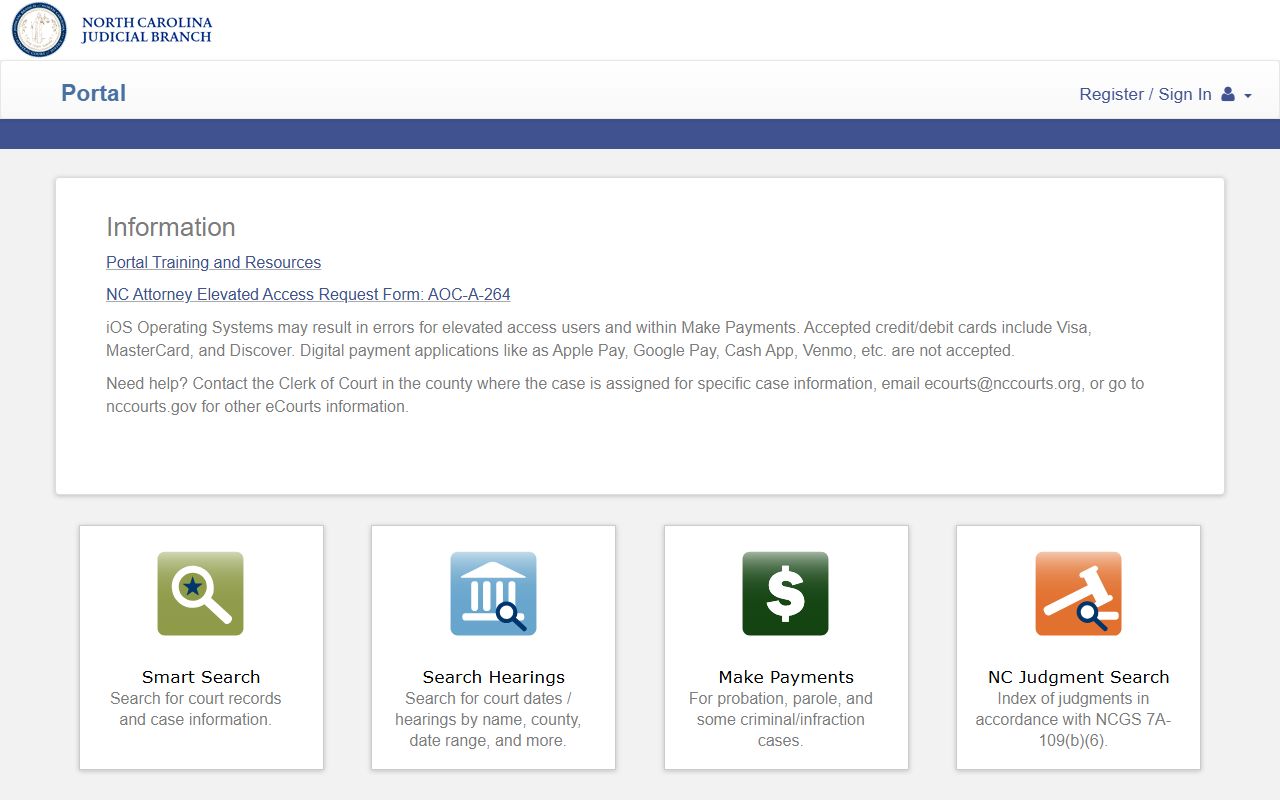
The portal lets you filter results by case type, date range, and court location. This helps when you need to narrow a broad search.
Civil Records in Lee County
Civil cases in Lee County include lawsuits, small claims, contract disputes, and property matters. Small claims cases are filed in District Court for amounts up to $10,000. Larger civil cases go to Superior Court. The clerk's office keeps files for all civil matters.
Landlord disputes and debt collection cases are common in Lee County civil court. The NC Courts forms library has blank forms for many civil filings. You can download and fill them out before your visit. This saves time at the clerk's window.
Civil judgments in Lee County become public record once filed. They appear on the eCourts portal within a few days. Liens and judgments can also be searched through the Lee County Register of Deeds office, which sits in the same building complex.
Lee County Court Records for Estates
Estate and probate matters make up a large part of the clerk's workload in Lee County. When someone dies, the executor or administrator files paperwork with the clerk to open the estate. The clerk then serves as the judge in most estate proceedings under N.C.G.S. 28A.
- Filing a will for probate
- Appointing an executor or administrator
- Filing an estate inventory and accounting
- Guardianship and incompetency hearings
- Name changes and adoption filings
Each of these filings creates a public record that can be searched at the clerk's office. Estate files often contain detailed asset lists, debts, and heir information. The NC Courts records help page offers more details on what estate records are available and how to request them.
Note: Some estate records may be sealed by court order, especially those involving minors.
Lee County Sheriff Reports
The Lee County Sheriff's Office keeps its own set of records apart from the court system. These include arrest reports, incident reports, and booking logs. The sheriff's office sits at 1700 S. Horner Blvd in Sanford, just down the road from the courthouse.
To request an incident report, call (919) 774-5531 or visit the office in person. You will need the approximate date, location, and names involved. Reports typically take three to five business days to prepare. The sheriff's office also posts current inmate information on its website.
Sanford has its own police department that handles cases within city limits. For city matters, contact the Sanford Police Department separately. Cases that start with Sanford PD may still end up in Lee County court records once charges are filed.
Sealed and Restricted Records
Not all Lee County court records are open to the public. Juvenile cases are sealed under N.C.G.S. 7B-2901. Expunged records are removed from public view under N.C.G.S. 15A-152. Some domestic violence records and mental health proceedings also carry restrictions.
If you are unsure whether a record is public, ask the clerk's office. Staff can tell you if a file is restricted. You cannot get around a court seal without a judge's order. The rules are strict and apply the same way across all North Carolina counties.
- Juvenile case files are not open to the public
- Expunged records are removed from all public databases
- Sealed domestic cases require a court order to access
Nearby Counties
Lee County is bordered by several counties in central North Carolina.