
Pamlico County Court Records
Pamlico County court records are stored at the courthouse in Bayboro, North Carolina. The Clerk of Superior Court keeps all case files for this small coastal county. Bayboro is the county seat. Pamlico County sits on a peninsula between the Neuse River and Pamlico Sound in eastern North Carolina. You can search for criminal cases, civil filings, and other court documents through the clerk's office. Records span many years and cover all types of cases heard in Pamlico County courts. Staff can help you find the records you need.
Pamlico County Clerk of Court
The Clerk of Superior Court is the official record keeper for Pamlico County courts. This office files new cases, stores all court documents, and issues copies. The clerk also manages estate cases, guardianships, and special proceedings. Every court record in Pamlico County passes through this office.
The Pamlico County courthouse is at 202 Main St in Bayboro. Visit during regular business hours to search court records or get copies. Staff can look up cases by name or case number. Bring your ID when you visit. If you need certified copies, call ahead so staff can prepare them. The clerk's office serves all of Pamlico County from this one location in Bayboro, including the communities of Oriental, Arapahoe, Grantsboro, and Alliance.
The North Carolina Judicial Branch website has more information about Pamlico County courts. Go to nccourts.gov for court calendars, forms, and contact details for the clerk's office.
| Court |
Pamlico County Clerk of Superior Court 202 Main St Bayboro, NC 28515 Phone: (252) 745-6000 |
|---|---|
| Hours | Monday through Friday, 8:00 AM to 5:00 PM |
| Website | nccourts.gov |
Searching Pamlico County Court Records
There are two main ways to search court records in Pamlico County. You can search online or visit the courthouse in Bayboro. Online searches are fast and free for basic case data. In-person visits let you see the complete case file and get copies right away.
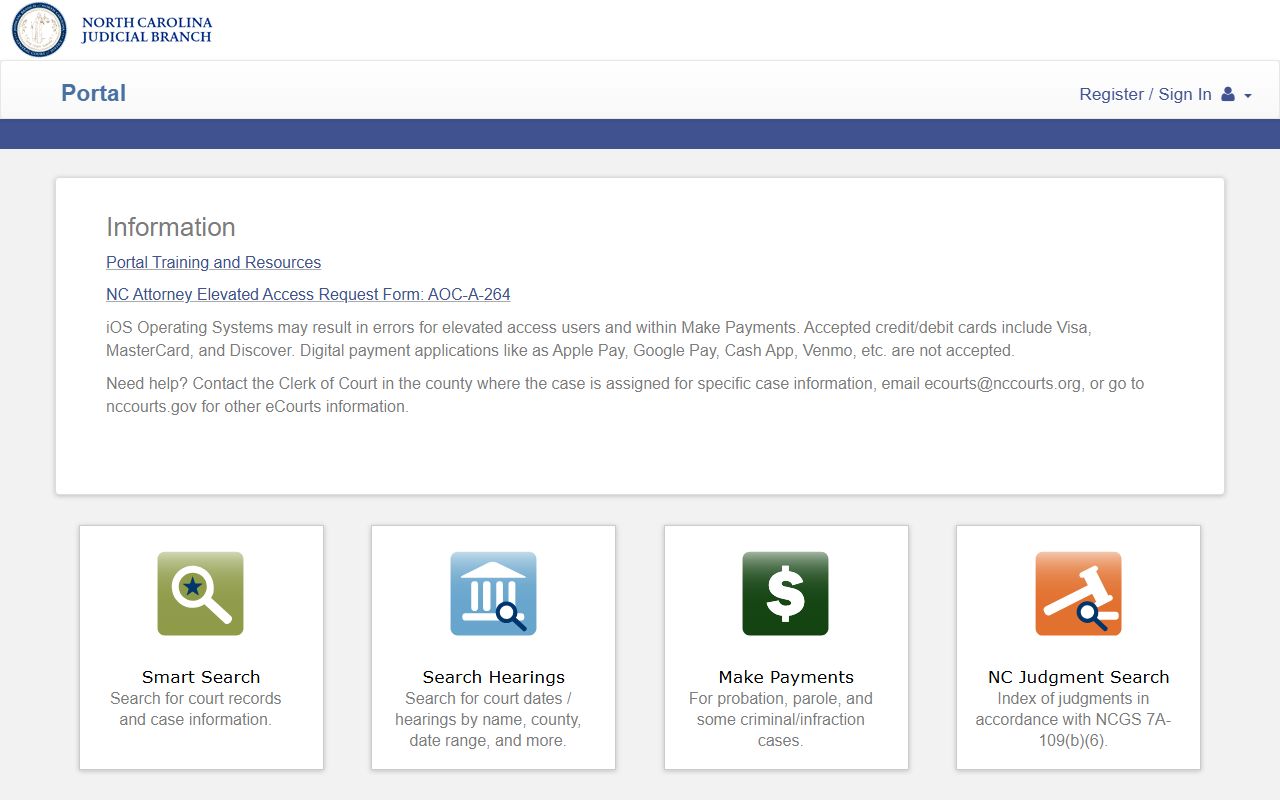
The North Carolina eCourts portal gives you access to court records from every county. This includes Pamlico County. Go to portal-nc.tylertech.cloud/Portal/ to start a search. You can look up cases by party name or case number. The portal shows case type, filing date, and current status. It covers both criminal and civil cases filed in Pamlico County. The system is free for basic searches and does not require you to create an account.
For a full file review, go to the clerk's office at 202 Main St in Bayboro. Staff will pull the file for you. You can read through all documents in the case. Copy fees apply if you want to take pages with you. Certified copies cost more than plain ones.
Note: Sealed or expunged records will not show up in public searches of Pamlico County court records.
Criminal Records in Pamlico County
Pamlico County criminal records include all cases where someone is charged with a crime. These range from traffic tickets to serious felonies. The clerk keeps records for both District Court and Superior Court criminal cases. District Court handles misdemeanors and infractions. Superior Court handles felonies.
A criminal case record in Pamlico County shows the defendant's name, the charges, court dates, and the outcome. It may also list bond amounts, attorney names, and sentencing details. Under N.C.G.S. Chapter 132, most criminal records are public. Anyone can ask to view them at the courthouse in Bayboro.
You can search criminal records online through the state portal. Look up cases by defendant name to find filings in Pamlico County. For a statewide criminal history check, the North Carolina State Bureau of Investigation offers background searches for a fee.
Pamlico County is one of the smallest counties in North Carolina by population. The court handles fewer cases than larger counties, which can mean faster processing times for record requests.
Pamlico County Civil Records
Civil cases in Pamlico County involve disputes between people or businesses. Common types include contract claims, property disputes, personal injury cases, and debt collection matters. Small claims go to District Court. Larger civil cases go to Superior Court. The Pamlico County clerk files and stores all civil case records.
To find a civil case, you need at least one party's name. The clerk can search by plaintiff or defendant. You can also use a case number if you know it. Civil records include the complaint, answer, motions, orders, and the final judgment. Most civil records in Pamlico County are open to the public under North Carolina law.
Financial account numbers and Social Security numbers are typically removed from public copies of Pamlico County civil records.
Pamlico County Sheriff
The Pamlico County Sheriff's Office handles law enforcement for the county. The office is at 200 Main St in Bayboro. Call (252) 745-3101 to reach the sheriff. The office also serves court papers and runs the county detention center.
Arrest records from the sheriff become part of the court file once charges are filed in Pamlico County. The sheriff maintains booking logs, incident reports, and other law enforcement records. Some of these are public. For records that are not part of a court case, contact the sheriff's office directly. Court records stay at the clerk's office in Bayboro.
| Sheriff |
Pamlico County Sheriff's Office 200 Main St Bayboro, NC 28515 Phone: (252) 745-3101 |
|---|---|
| Hours | Monday through Friday, 8:00 AM to 5:00 PM (24/7 for emergencies) |
Getting Copies of Pamlico County Records
You can get copies of Pamlico County court records in several ways. Visit the clerk's office in Bayboro for the quickest service. You can also mail a written request to the courthouse. Include the case number, party names, and which documents you need. Enclose the right payment for copy fees.
Plain copies cost less than certified copies. Certified copies carry the clerk's official seal and signature. You need certified copies for most legal uses. Banks, courts, and government agencies usually require them. Call the Pamlico County clerk at (252) 745-6000 to check on current fees before you send your request.
Visit nccourts.gov/help-topics/court-records for general guidance on accessing court records in North Carolina. This page explains your rights under state law and the steps for requesting records from Pamlico County and other counties.
Estate and Probate Records
The Pamlico County clerk handles estate and probate cases. These include wills, estate administration, and guardianship matters. When a Pamlico County resident passes away, their estate may go through probate at the clerk's office. The clerk oversees the entire process and keeps all related records on file.
Estate records in Pamlico County show the will, the executor or administrator, an inventory of assets, and the final accounting. These records are public. You can search them at the clerk's office in Bayboro. Estate cases have their own case numbers, separate from criminal and civil cases filed in Pamlico County.
Guardianship records involve cases where someone is named to care for a minor or an adult who cannot care for themselves. The clerk manages these files as well. Some guardianship records may have limited public access to protect the person under care.
Note: Estate cases in Pamlico County must be filed in the county where the person lived at the time of death.
Court Forms for Pamlico County
North Carolina uses standard court forms that work in all counties. You can download them from nccourts.gov/documents/forms. Forms cover civil complaints, motions, estate filings, and many other case types. Pick the right form before visiting the Pamlico County courthouse.
Fill out your forms before you go to the clerk's office. Staff can accept your filing and assign a case number. They cannot give legal advice, but they can point you to the correct form for your type of case. Filing fees vary by case type in Pamlico County. Ask the clerk about the current fee for your filing.
Nearby Counties
These counties border Pamlico County. If you are not sure where a case was filed, check the address where the events occurred. Cases must be filed in the correct county for the court to have jurisdiction.